
 English
 Español
 Portugues
 Pусский
 Français
 العربية
 ไทย
ไทย Türk dili
 Tiếng Việt


FPV-Drohnen-Tri-Band-Antenne
FPV Drone Tri-Band Antenna: A Comprehensive Overview FPV (First-Person View) drone racing and freestyle flying demand high-performance antennas to ensure stable video transmission and reliable control signals. A Tri-Band Antenna is a cutting-edge solution designed to operate across three key frequency bands—typically 5.8GHz, 2.4GHz, and 1.3GHz—providing versatility and optimized performance for different FPV applications. Key Features 1. Multi-Band Compatibility Unlike single-band antennas, a tri-band antenna supports multiple frequencies, allowing pilots to switch between bands without changing hardware. This is particularly useful in environments with interference or when complying with regional frequency regulations. 2. Enhanced Signal Penetration Lower frequencies like 1.3GHz offer better obstacle penetration, making them ideal for long-range or urban flying, while 5.8GHz delivers low-latency video for high-speed racing. The 2.4GHz band balances range and signal clarity for mid-range applications. 3. Circular Polarization Most tri-band antennas use LHCP (Left-Hand Circular Polarization) or RHCP (Right-Hand Circular Polarization) to minimize multipath interference, ensuring cleaner video feeds even in challenging environments. 4. Lightweight and Durable Design Constructed from high-quality materials like fiberglass or flexible silicone, these antennas are built to withstand crashes and harsh conditions while maintaining a low weight to avoid affecting drone agility. 5. Omnidirectional or Directional Options Some tri-band antennas offer omnidirectional radiation patterns for all-around coverage, while directional variants (e.g., patch antennas) provide extended range for long-distance flights. Applications - FPV Racing: The 5.8GHz band ensures minimal latency for competitive racing. - Long-Range Exploration: The 1.3GHz band extends transmission range with better penetration. - Freestyle Flying: The 2.4GHz band offers a balance of range and responsiveness for dynamic maneuvers. Advantages Over Single-Band Antennas A tri-band antenna eliminates the need for multiple antennas, reducing weight and complexity. It also future-proofs setups, allowing pilots to adapt to different flying scenarios without hardware swaps. Conclusion The FPV Tri-Band Antenna is a versatile, high-performance solution for drone enthusiasts who demand flexibility, reliability, and superior signal quality across various flying conditions. Whether for racing, freestyle, or long-range flights, this antenna ensures optimal performance across multiple frequency bands, making it an essential upgrade for serious FPV pilots.
Produkt
Kategorie:
-
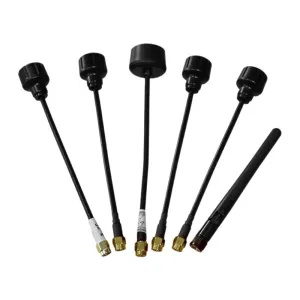
FPV-Drohnenantennen
Ihre Klassifizierung: DrohnenzubehörAnsichten: 198Nummer:Veröffentlichungszeit: 2025-10-13 17:31:59XYH FPV-Drohnenantennen unterstützen 1,2G/3,3G/5,8G-Bänder mit omnidirektionaler Abdeckung, RHCP-Zirkularpolarisation (Anti-Interferenz) und SMA-Stecker. Es besteht aus umweltfreundlichem ABS und lässt sich zur Winkeleinstellung flexibel biegen. Es passt auf FPV-Drohnen aus Kohlefaser, 5-Zoll-FPV-Drohnen-Kits und Rennrahmen und sorgt so für stabile Video-/Steuersignale.ProduktübersichtUnsere FPV-Drohnenantennen sind für eine zuverlässige Signalübertragung über große Entfernungen konzipiert und ein wichtiges Drohnenzubehör für Carbonfaser-FPV-Drohnen und Carbonfaser-Renndrohnenrahmen. Mit Tri-B...
Nachrichten
Kategorie:
Keine Suchergebnisse!
Fall
Kategorie:
Keine Suchergebnisse!
Video
Kategorie:
Keine Suchergebnisse!
Herunterladen
Kategorie:
Keine Suchergebnisse!
Rekrutierung
Kategorie:
Keine Suchergebnisse!
Empfohlene Produkte
Keine Suchergebnisse!



 Telefon